Inria Chile in the Classroom: Discover Our Fête de la Science 2026 Program in French Alliance Schools of Santiago
Date :
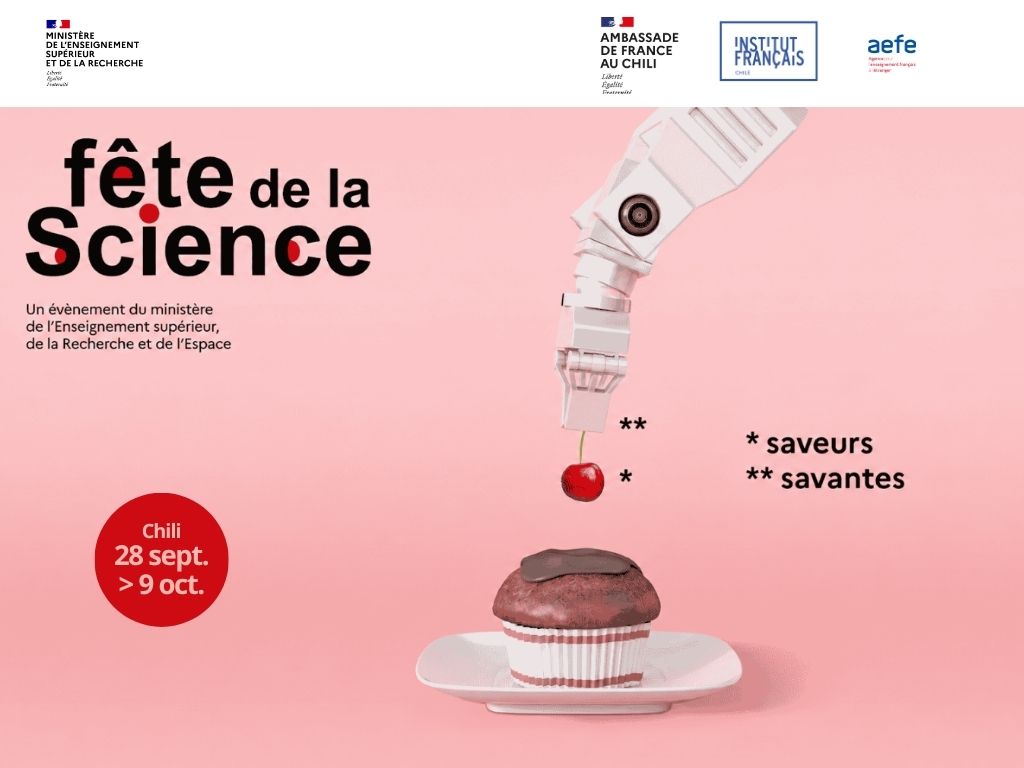
The Fête de la Science (Science Festival) is a free, public event organized by the French Ministry of Higher Education and Research that has celebrated science, technology, and innovation across France every year for over 30 years. Aimed at all audiences, it fosters knowledge exchange between scientists and citizens, highlights the work of the scientific community, and inspires young people to engage with science. For more information, visit the event’s official page.
In Chile, the French Embassy and the French Institute of Chile organize the event in collaboration with the network of French high schools and French Alliance schools. The goal is to bring science, technology, and innovation closer to girls, boys, and adolescents in Santiago, Curicó, Concepción, Osorno, and Reñaca.
The 2026 edition of the Science Festival is themed "Saveurs savantes" (Flavors with Sciences), an opportunity to celebrate gastronomy, taste, and food in all their scientific dimensions. This theme honors the centennial of the Michelin star and the bicentennial of Jean Anthelme Brillat-Savarin’s work "The Physiology of Taste", which links the sense of taste to the biological functioning of the human body and its cognitive perceptions. This universal theme also invites people to take an interest in science.
The Inria Chile team will conduct workshops and talks in classrooms at Lycée Saint Exupéry in the Vitacura and Chamisero districts with talks and workshops aimed at introducing students of all levels and ages to the results of projects in digital sciences and technologies. The activities will take place in the students’ classrooms from September 28 to October 8.
At the Vitacura branch:
At the Chamisero branch:
The Fête de la Science 2026, on the French Institute of Chile's website
Inria at the Fête de la Science in France, on the Fête de la Science website